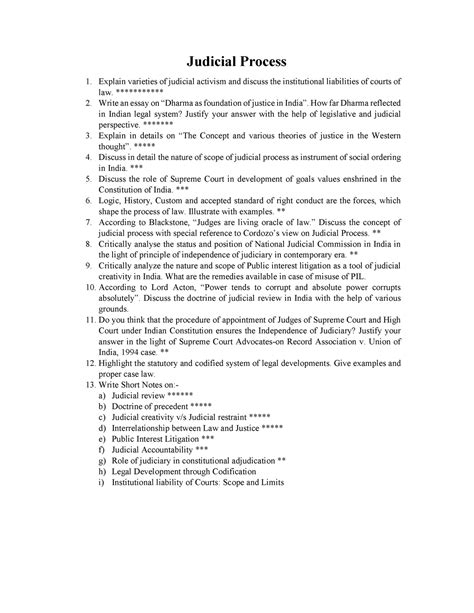
Mastering the judicial process is essential for anyone involved in the legal system, whether you're a law student, a practicing attorney, or simply someone interested in understanding how courts operate. This blog post will guide you through key study questions, providing clear and concise answers to help you grasp the intricacies of the judicial process. From the roles of judges and juries to the stages of a trial, we’ve got you covered. Let’s dive in and enhance your knowledge of the judicial system, ensuring you’re well-prepared for exams or real-world applications.
Understanding the Judicial Process: A Comprehensive Overview
The judicial process is the framework through which courts resolve disputes and enforce laws. It involves several stages, each with specific procedures and participants. Below, we break down the key components to help you understand the system better.
Key Stages of the Judicial Process
- Filing a Case: The process begins when a plaintiff files a complaint against a defendant.
- Pleadings: Both parties present their claims and defenses in written documents.
- Discovery: Evidence is exchanged between parties to build their cases.
- Trial: The case is presented before a judge or jury, who makes a final decision.
- Appeal: If dissatisfied, either party can challenge the decision in a higher court.
📌 Note: Understanding these stages is crucial for navigating the judicial process effectively.
Roles in the Judicial System: Who Does What?
The judicial system relies on various participants to function smoothly. Here’s a breakdown of the key roles and their responsibilities.
| Role | Responsibility |
|---|---|
| Judge | Presides over the trial, ensures fair proceedings, and makes legal rulings. |
| Jury | Listens to evidence and delivers a verdict in criminal and some civil cases. |
| Attorney | Represents clients, presents arguments, and examines witnesses. |
| Court Clerk | Manages court records, schedules cases, and assists the judge. |
📌 Note: Each role is vital for maintaining the integrity and efficiency of the judicial process.
Common Study Questions Answered: Clarifying Judicial Process Doubts

Studying the judicial process often raises questions. Below, we address some of the most frequently asked queries to help you master the subject.
What is the Difference Between Civil and Criminal Cases?
Civil cases involve disputes between individuals or organizations, often resulting in monetary compensation or injunctions. Criminal cases, on the other hand, involve the state prosecuting individuals for violating laws, with penalties including fines or imprisonment.
How Does a Jury Reach a Verdict?
Jurors deliberate in private, discussing the evidence and applying the law as instructed by the judge. A unanimous decision is required in criminal cases, while civil cases may allow for a majority verdict.
What is the Role of Precedent in the Judicial Process?
Precedent refers to past court decisions that guide future rulings. It ensures consistency and fairness in the legal system, allowing judges to rely on established principles when deciding similar cases.
Summary Checklist: Mastering the Judicial Process
- Understand the key stages of the judicial process.
- Familiarize yourself with the roles of judges, juries, and attorneys.
- Differentiate between civil and criminal cases.
- Know how precedent influences court decisions.
Mastering the judicial process requires a solid understanding of its stages, roles, and key concepts. By addressing common study questions and providing clear explanations, this guide aims to enhance your knowledge and confidence in navigating the legal system. Whether you’re preparing for exams or seeking to understand real-world applications, this comprehensive overview has you covered. Keep learning, stay curious, and apply your knowledge to excel in your legal journey.
What is the first step in the judicial process?
+The first step is filing a case, where a plaintiff submits a complaint against a defendant, initiating the legal proceedings.
Can a jury decision be overturned?
+Yes, a jury decision can be appealed and potentially overturned by a higher court if legal errors are found.
What is the significance of precedent in law?
+Precedent ensures consistency in legal decisions by requiring judges to follow past rulings in similar cases, promoting fairness and predictability.
