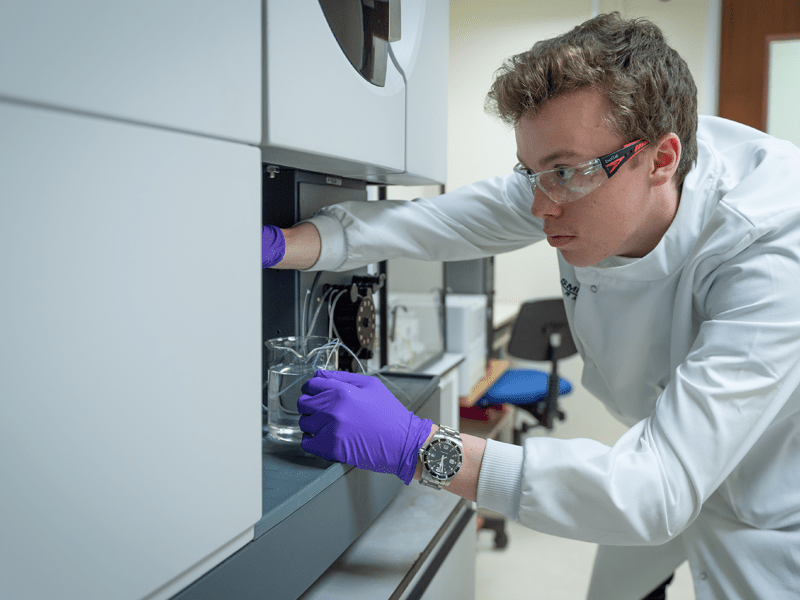
Phthalates are ubiquitous in our environment, found in everything from plastics to personal care products. Their widespread use has raised significant health concerns, making phthalate analysis a critical task for researchers and industries alike. Mass spectrometry (MS) has emerged as a powerful tool for detecting and quantifying phthalates, offering high sensitivity and selectivity. However, analysts often encounter challenges that can compromise accuracy and efficiency. This post delves into common problems in phthalate analysis via mass spectrometry and provides practical solutions to overcome them, ensuring reliable results.
Common Challenges in Phthalate Analysis via Mass Spectrometry
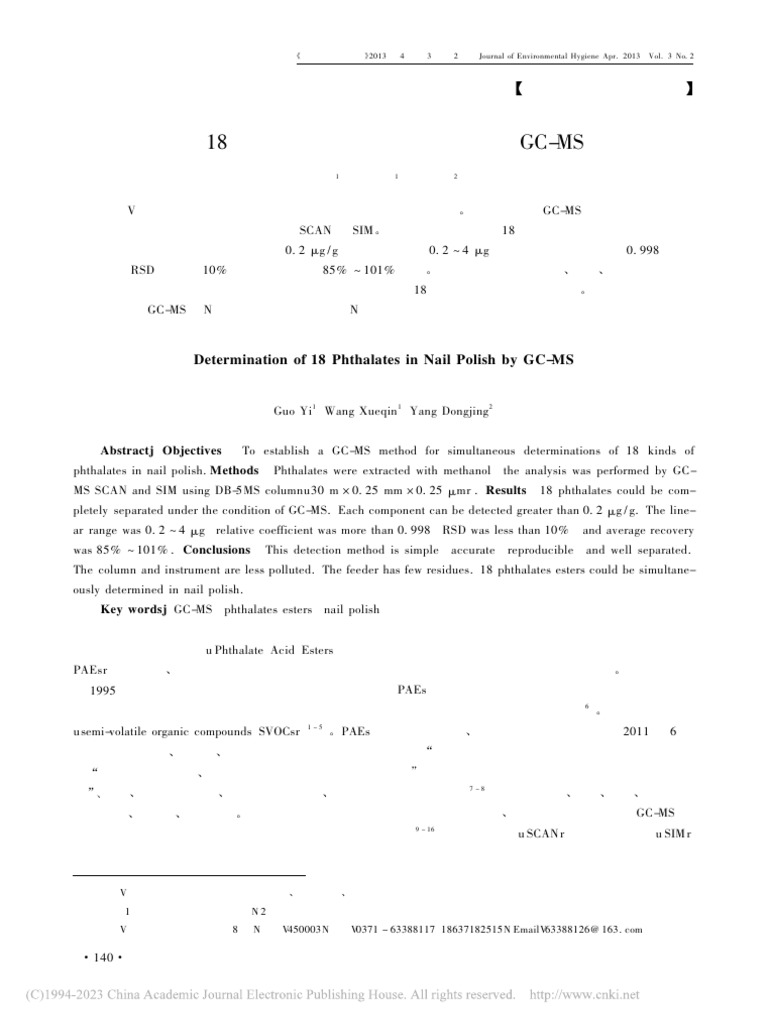
1. Matrix Interference: A Persistent Issue
One of the most common challenges in phthalate analysis is matrix interference. Complex sample matrices, such as plastics or biological fluids, often contain compounds that co-elute with phthalates, leading to false positives or negatives.
Solution:
- Employ sample preparation techniques like solid-phase extraction (SPE) or liquid-liquid extraction (LLE) to isolate phthalates from the matrix.
- Use internal standards to account for matrix effects and improve quantification accuracy.
📌 Note: Always validate your extraction method to ensure complete recovery of phthalates.
2. Ion Suppression and Enhancement
Mass spectrometry is susceptible to ion suppression or enhancement, where co-eluting compounds interfere with the ionization of phthalates, skewing results.
Solution:
- Optimize MS/MS conditions to enhance selectivity and reduce interference.
- Dilute samples to minimize the concentration of interfering compounds.
3. Isobaric Interference: When Molecules Masquerade
Phthalates often have isobaric interferences—compounds with the same mass-to-charge ratio—that complicate analysis.
Solution:
- Utilize high-resolution mass spectrometry (HRMS) to distinguish between isobaric species based on exact mass.
- Leverage chromatographic separation to resolve co-eluting compounds before MS detection.
Optimizing Phthalate Analysis: Best Practices
1. Instrument Calibration and Maintenance
Regular calibration and maintenance of your mass spectrometer are essential for accurate phthalate analysis.
Checklist:
- Calibrate the instrument daily using certified reference materials.
- Clean ion sources and interfaces weekly to prevent contamination.
- Perform routine checks for drift in mass accuracy and resolution.
2. Method Validation for Reliable Results
Validating your analytical method ensures it meets performance criteria for phthalate detection.
Key Parameters to Validate:
- Linearity: Ensure the method provides accurate results across the concentration range.
- Limit of Detection (LOD) and Limit of Quantification (LOQ): Verify sensitivity for low-level phthalate analysis.
- Precision and Accuracy: Assess repeatability and trueness of results.
📌 Note: Use spiked samples to evaluate recovery rates during validation.
3. Choosing the Right Analytical Workflow
The success of phthalate analysis depends on selecting the appropriate workflow, from sample preparation to detection.
Recommended Workflow:
1. Sample Preparation: Use SPE or LLE for matrix clean-up.
2. Chromatography: Employ GC or LC based on phthalate volatility and polarity.
3. Mass Spectrometry: Opt for MS/MS or HRMS for enhanced selectivity.
Wrapping Up: Mastering Phthalate Analysis via Mass Spectrometry

Navigating the challenges of phthalate analysis via mass spectrometry requires a combination of technical expertise and strategic problem-solving. By addressing issues like matrix interference, ion suppression, and isobaric interference, analysts can achieve accurate and reliable results. Implementing best practices, such as rigorous instrument maintenance and method validation, further ensures the integrity of the analysis.
Whether you’re a researcher, regulator, or industry professional, mastering phthalate analysis is essential for safeguarding public health and environmental safety. With the right tools and techniques, you can overcome common obstacles and deliver precise phthalate quantification.
What is the best sample preparation method for phthalate analysis?
+Solid-phase extraction (SPE) is widely recommended for its efficiency in isolating phthalates from complex matrices.
How can I minimize ion suppression in mass spectrometry?
+Optimize MS/MS conditions, dilute samples, and use internal standards to account for matrix effects.
Why is high-resolution mass spectrometry beneficial for phthalate analysis?
+HRMS provides exact mass measurements, allowing for the differentiation of isobaric interferences and improving accuracy.
Related Keywords: phthalate analysis, mass spectrometry, sample preparation, matrix interference, ion suppression, HRMS, method validation, environmental analysis, plastic testing.
