<!DOCTYPE html>
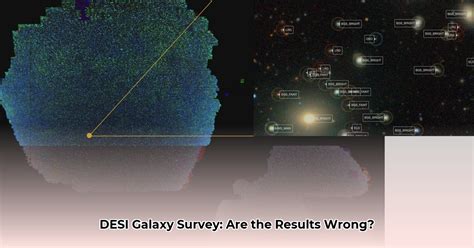
The Dark Energy Spectroscopic Instrument (DESI) has revolutionized our understanding of the universe by mapping millions of galaxies. However, analyzing its data, particularly the bispectrum, presents unique challenges. One such challenge is the error of squeezed limits, a subtle yet significant issue that can skew cosmological interpretations. This blog delves into the nature of this error, its impact on DESI bispectrum analysis, and strategies to mitigate it, ensuring accurate insights into the universe's structure and evolution.
Understanding the DESI Bispectrum and Squeezed Limits
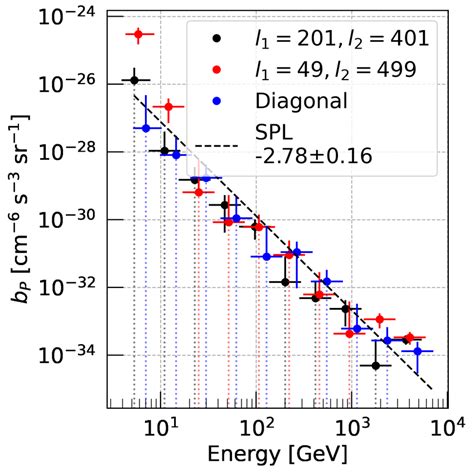
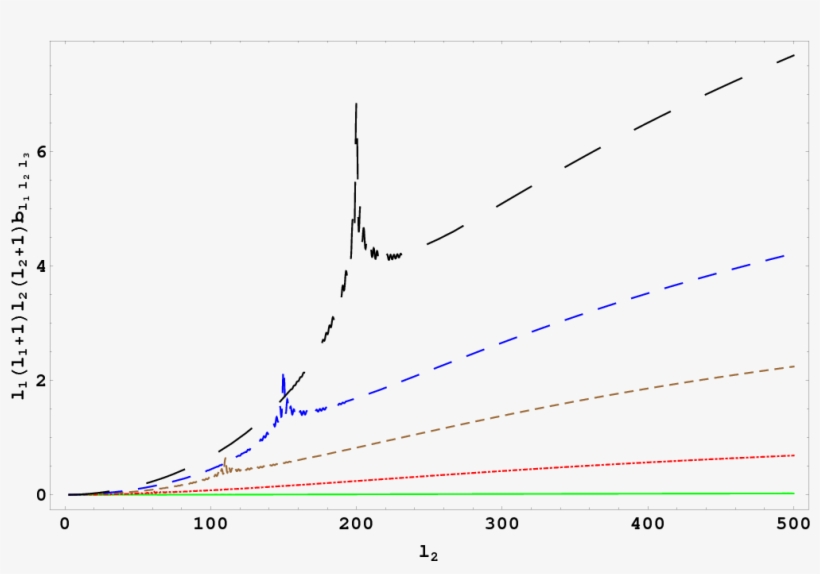
The DESI bispectrum is a powerful tool for studying the three-point correlation function of matter in the universe. It provides deeper insights into the distribution of galaxies and the underlying cosmology than the power spectrum alone. However, the squeezed limit—where one of the wave modes becomes much smaller than the others—poses a challenge. In this regime, the bispectrum is sensitive to long-wavelength modes, which are prone to systematic errors and theoretical uncertainties.
What Are Squeezed Limits?
Squeezed limits occur when one wave mode in the bispectrum becomes significantly smaller than the others. This scenario is particularly relevant in large-scale structure studies, where long-wavelength modes dominate. Unfortunately, these modes are susceptible to errors from theoretical modeling, survey systematics, and instrumental effects.
Why Do Squeezed Limits Matter in DESI Analysis?
In DESI bispectrum analysis, squeezed limits can introduce biases in cosmological parameter estimation. For instance, errors in these limits can affect measurements of dark energy properties, neutrino masses, and primordial non-Gaussianity. Addressing these errors is crucial for extracting accurate and reliable results from DESI data.
Sources of Error in Squeezed Limits

Several factors contribute to errors in squeezed limits during DESI bispectrum analysis. Understanding these sources is the first step toward mitigating their impact.
Theoretical Uncertainties
Theoretical models for the bispectrum in squeezed limits rely on assumptions about gravity, dark matter, and initial conditions. Deviations from these assumptions can lead to significant errors. For example, modifications to General Relativity or non-standard dark matter models can alter the expected bispectrum shape.
Survey Systematics
DESI’s observational strategy introduces systematics such as fiber collisions, redshift failures, and incomplete sky coverage. These effects can contaminate the bispectrum, particularly in squeezed limits where long-wavelength modes are more sensitive to large-scale systematics.
Instrumental Effects
Instrumental noise, calibration errors, and other technical issues can also impact squeezed limit measurements. These effects are especially problematic for DESI, which operates at unprecedented scales and precision.
Strategies to Mitigate Squeezed Limit Errors
Addressing errors in squeezed limits requires a combination of theoretical advancements, robust data analysis techniques, and careful systematic error mitigation.
Improved Theoretical Modeling
Developing more accurate theoretical models for the bispectrum in squeezed limits is essential. This includes incorporating non-linear effects, relativistic corrections, and alternative cosmological models. Advances in perturbation theory and numerical simulations play a key role here.
Robust Data Analysis Techniques
Implementing advanced statistical methods can help isolate and correct for squeezed limit errors. Techniques such as:
- Covariance Matrix Estimation: Accounting for correlations between different modes.
- Forward Modeling: Simulating observational effects to correct for systematics.
- Machine Learning: Using AI to identify and mitigate errors in squeezed limits.
Systematic Error Mitigation
Careful calibration and correction of survey systematics are vital. This includes:
- Fiber Assignment Optimization: Minimizing fiber collisions and maximizing sky coverage.
- Redshift Quality Control: Ensuring accurate and reliable redshift measurements.
- Instrumental Calibration: Regularly calibrating DESI instruments to reduce noise and errors.
📌 Note: Combining theoretical improvements with robust data analysis and systematic error mitigation is key to accurately interpreting DESI bispectrum results in squeezed limits.
Practical Checklist for DESI Bispectrum Analysis
To ensure accurate results in DESI bispectrum analysis, follow this checklist:
- Verify theoretical models for squeezed limits.
- Implement advanced statistical techniques for error correction.
- Calibrate and correct for survey systematics.
- Regularly validate results using simulations and cross-checks.
- Document and report uncertainties in squeezed limit measurements.
By addressing the error of squeezed limits in DESI bispectrum analysis, we can unlock the full potential of this powerful cosmological tool. Accurate measurements in these regimes will deepen our understanding of dark energy, dark matter, and the universe's large-scale structure, DESI bispectrum analysis,cosmological parameter estimation,dark energy properties,primordial non-Gaussianity,large-scale structure studies.
What are squeezed limits in bispectrum analysis?
+Squeezed limits occur when one wave mode in the bispectrum becomes much smaller than the others, making the measurement sensitive to long-wavelength modes and prone to errors.
Why are squeezed limits problematic in DESI analysis?
+Errors in squeezed limits can bias cosmological parameter estimation, affecting measurements of dark energy, neutrino masses, and primordial non-Gaussianity.
How can squeezed limit errors be mitigated?
+Mitigation strategies include improving theoretical models, using advanced statistical techniques, and carefully calibrating survey systematics.